





Slippery When Wet (Driving on Wet Leaves)
March 21, 2021
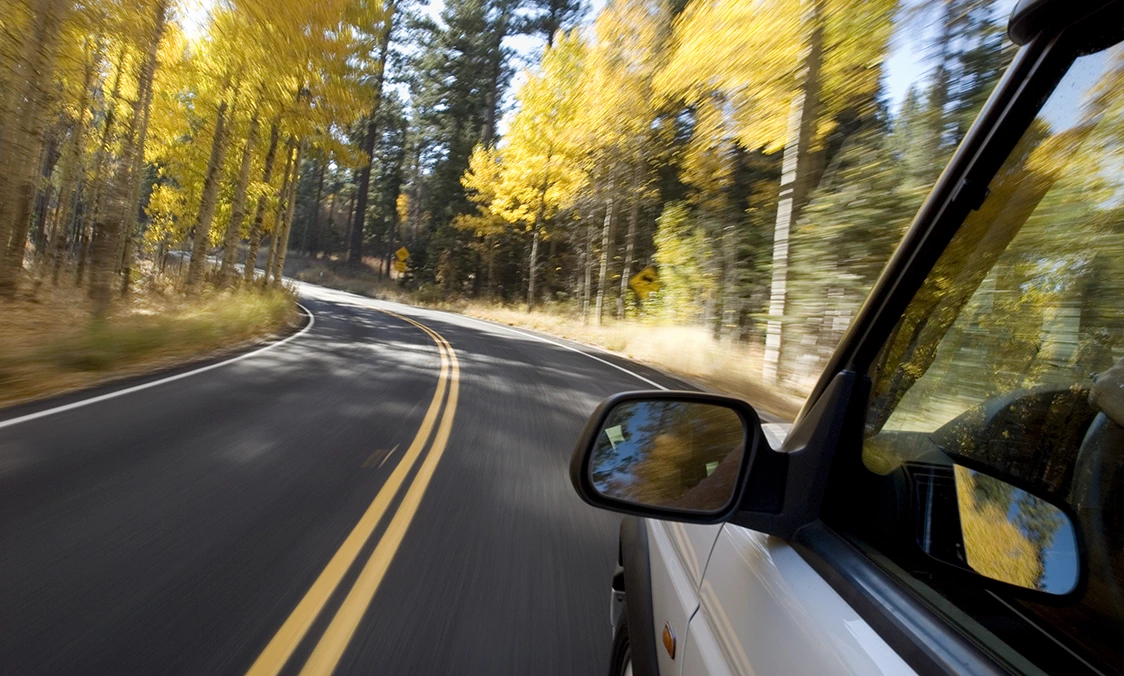
When the leaves fall, you might take a sightseeing trip to see them at peak color. Or you may simply live in a spot where there are a lot of trees. When those leaves get wet, you'd be surprised to learn just how slippery they can be.
We all know ice is slippery to drive on. What causes tires to slip on ice is a thin layer of water that comes between the road and your tires. Wet leaves can have the same effect. The surfaces of leaves are super slick when they're dry, even worse when you add a little moisture. There's one other thing about leaves. They are smaller than each tire's footprint, so your tread grips the pavement with uneven traction.
One study showed that your stopping distance can more than double on a surface covered with wet leaves when compared to that same road when it's dry. Double! That can spell trouble. So if you find yourself heading into an area with wet leaves on the road, slow down before you get into a jam. If you do start skidding, use the same driving techniques as you would on ice. Let off the accelerator, resist jamming on the brakes and steer into the skid. Again, speed can get you into trouble fast on a slippery surface.
One thing that can help is having tires that are appropriate for the way you drive and the places you travel. Your service advisor can offer suggestions for tires that are right for you. Have a technician examine your tread depth and the condition of your tires' rubber. Sun can break down rubber over time, and age can cause tires to fail, even if their tread seems to be deep enough.
Your tire is the point of traction between your vehicle and the road. Uncontrolled skids spell trouble and danger. Slow down when you see wet leaves on the road. They can make traction disappear before you know it.
Top Tech Auto Repair Clawson
664 S Rochester Rd
Clawson, Michigan 48017
248-589-0980
http://www.toptechautorepairclawson.com
Need Service?
More articles from Top Tech Auto Repair Clawson
Bad Vibes
October 25, 2026
Your vehicle has a way of letting you know when something's wrong. Consider a vibrating steering wheel. It certainly didn't do that when it was new, so that shake is trying to tell you something. There are a few things that can cause your steering wheel to vibrate as you drive down the road. On... More
More Than Noise Control:
October 23, 2026
Your vehicles exhaust system does more than direct fumes out the back. In addition to playing a critical role in safety, performance and fuel efficiency, it also is crucial in protecting our environment. Regular exhaust service makes sure your system continues operating as designed, preventing s... More
Save Your Tires and Fuel: Why TPMS Is More Than a Warning Lightc
October 11, 2026
You know that little light on your dashboard that looks like a tire? Dont ignore it. Its a lot more than a warning light. Its trying to tell you something that can protect your tires, improve your fuel economy and keep your vehicle traveling safely down the road. Its called TPMS. The abbreviati... More